


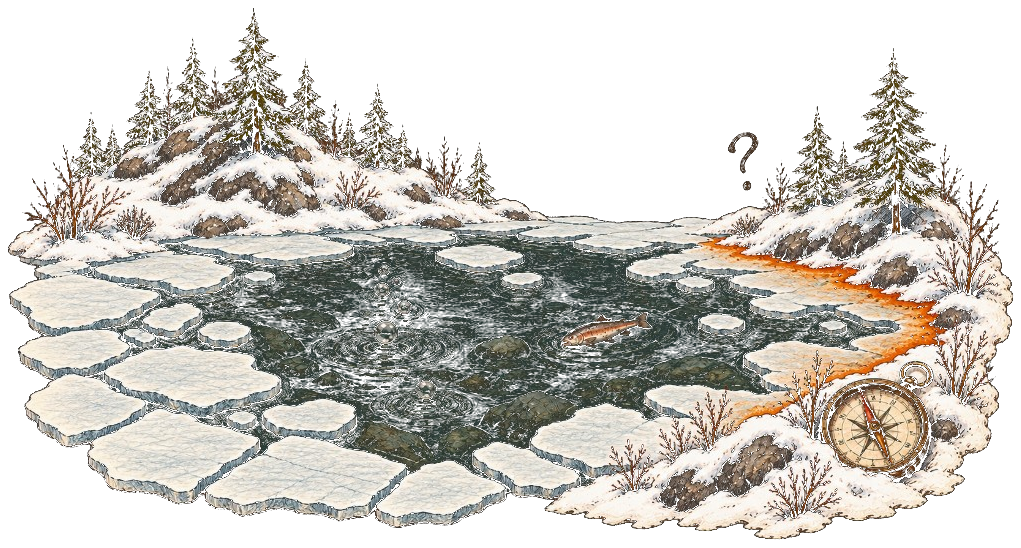
Featured mystery
The Lake That Wouldn't Freeze
A remote Ontario lake remains open at −25°C, and no one can agree on why.
Grades 9 and 10 are where students fall behind or get ahead.
We built Mosaic for the latter.

The idea
Mosaic does not drop Math, Science, English, or History. Students learn them together, through structured real-world challenges.
Real problems don't come in subjects.
How learning works
When the same idea returns across subjects and challenges, memory grows stronger.
Chart showing memory strength dipping and then rising higher each time an idea returns across math class, geography, Project Hail Mary, the cancer challenge, and the science fair.
That's the theory.
In practice …
Math
Science
English
History
Each subject, taught well. Rarely asked to meet.
… so Mosaic builds challenges where subjects meet

The sun is dying. You have one month.
See more →

A blackout hits. Someone has to decide who keeps the lights on.
See more →

Fix a real place that can't survive summer.
See more →

Build something people would actually use.
See more →

Real science. Real product. Real taste test.
See more →
Also part of school
Featured mystery
A remote Ontario lake remains open at −25°C, and no one can agree on why.
The academics
Every course is an OSSD credit granted through TVO ILC. Students move into Grade 11 and 12 courses when they're ready, not when their grade says so.
3 terms
per year
2 challenges
per term
8 courses
per year
2+ upper year courses
each year
View courses for
Dependent on students successfully passing prerequisites.
8 courses
Science advances to Grade 12 credit by year end.
A day at Mosaic
9:00 am
Remember
Bring yesterday's ideas back before adding today's.
9:10 am
Challenge learning
Short stretches of teaching, discussion, and problem-solving.
10:50 am
Apply
Use the morning's curriculum in a real challenge.
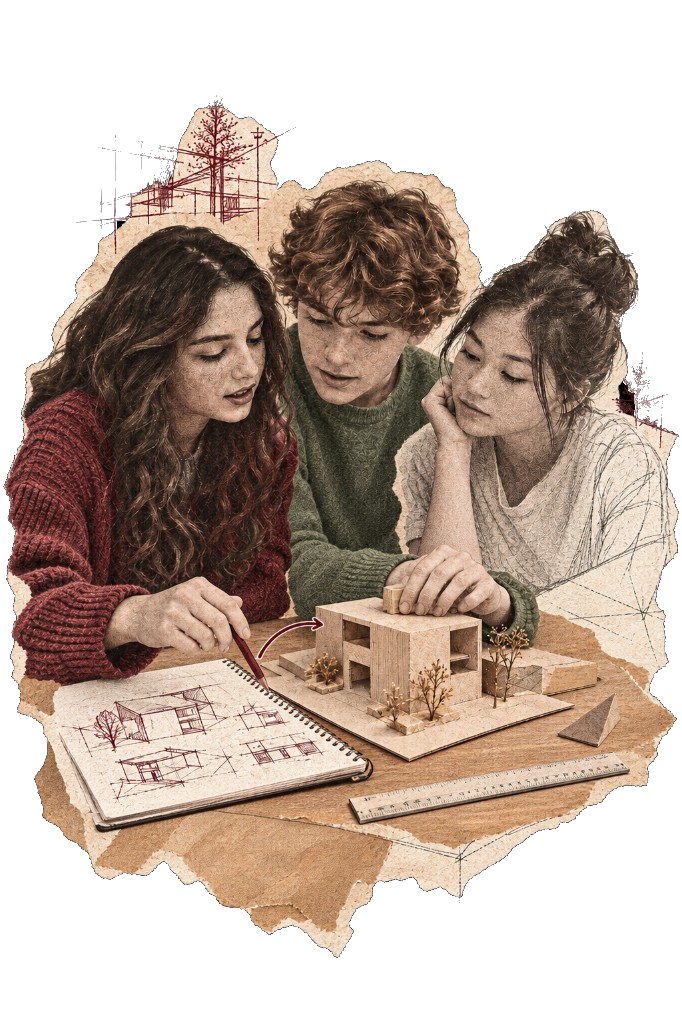
11:50 am
Move
Lunch, outside, and a movement reset mid-afternoon.
12:25 pm
Mindset coaching
20 minutes on how to learn and how to think: how memory works, planning your own work, learning from mistakes, first principles.

12:45 pm
Work independently
Individual courses, with staff in the room.
2:30 pm
Socratic learning
Students explain what they know, out loud, every day.
9:00 am
Remember
Bring yesterday's ideas back before adding today's.
9:10 am
Challenge learning
Short stretches of teaching, discussion, and problem-solving.
10:50 am
Apply
Use the morning's curriculum in a real challenge.
11:50 am
Move
Lunch, outside, and a movement reset mid-afternoon.
12:25 pm
Mindset coaching
20 minutes on how to learn and how to think: how memory works, planning your own work, learning from mistakes, first principles.
12:45 pm
Work independently
Individual courses, with staff in the room.
2:30 pm
Socratic learning
Students explain what they know, out loud, every day.
Core day ends at 3:00 · Optional Mosaic Studio until 5:00 · We start at 9 because teen sleep biology runs later.
Interdisciplinary project based learning, Retrieval practice, daily Socratic discussion and explicit mindset coaching are all well established in the science of learning. Most school timetables weren't built to use them - ours is.
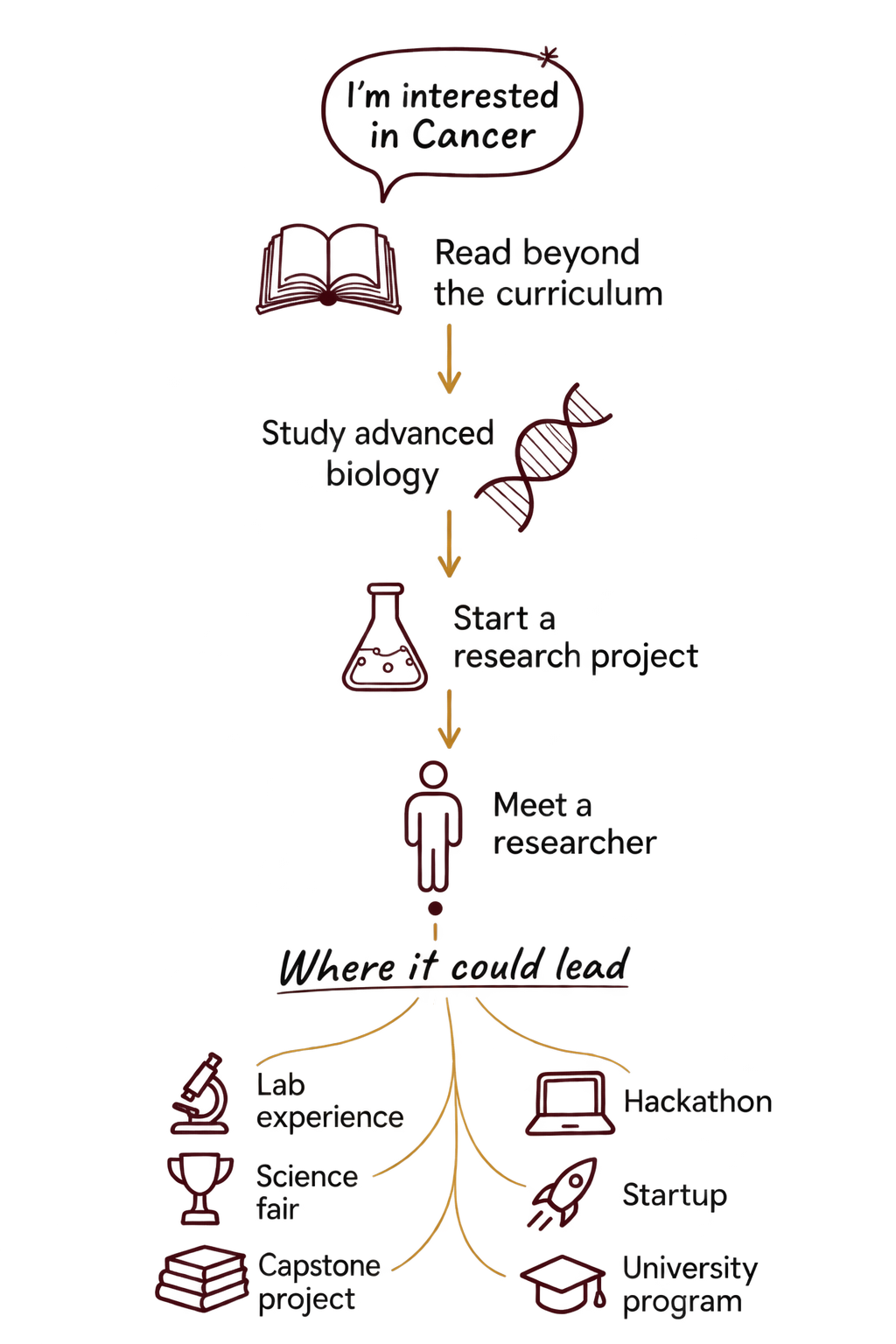
From learning to opportunity
Mindset coaching builds the confidence and initiative to take work beyond school into internships, research, and other real opportunities.
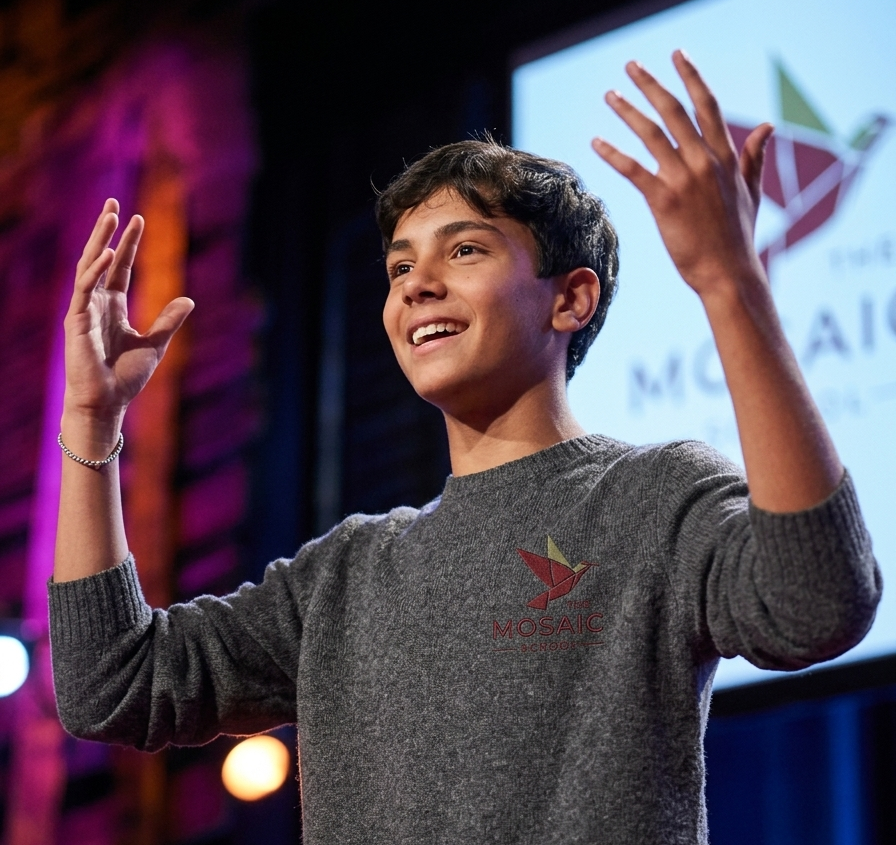
From learning to opportunity
Mindset coaching builds the confidence and initiative to take work beyond school into internships, research, and other real opportunities.
After Mosaic
Grades 9–10 at MosaicGrades 11 anywhere in Ontario
Credits that travel
OSSD credits accepted at any school in Ontario.
A year ahead
Ready to start Grade 11 with Grade 11 and 12 courses done.
Trained for Grade 11 and 12
Daily mindset coaching before the years that count.
A real portfolio
Students leave having built real things, not just written about them.
The people behind Mosaic
Built by people who have taught, mentored, and built programs for ambitious teenagers.

Co-founder · Curriculum & Student Experience
Leads curriculum and works with students and families. McMaster Integrated Science, UBC neuroscience, classroom teaching, and The Knowledge Society (TKS).

Co-founder · Technology, Systems & Innovation
Builds the technology and learning systems students use. McMaster biology and psychology; software engineer who has taught university psychology and shipped production products.
Educators, scientists, technologists, and entrepreneurs who strengthen our program.
Finalizing list, coming soon…
Our founding cohort begins in September 2027. First-year tuition is $5,800–$9,425 for the year (or about $483–$785 per month). This introductory rate reflects our first year as a school.
Explore tuition and what's included →
